Skip to content
All game projects
Shipped Transit Management Simulation Three.js · WebGL

MetroTycoon

A browser-based transport tycoon simulation where every new line, station and operating decision changes ridership, cash flow and public opinion.

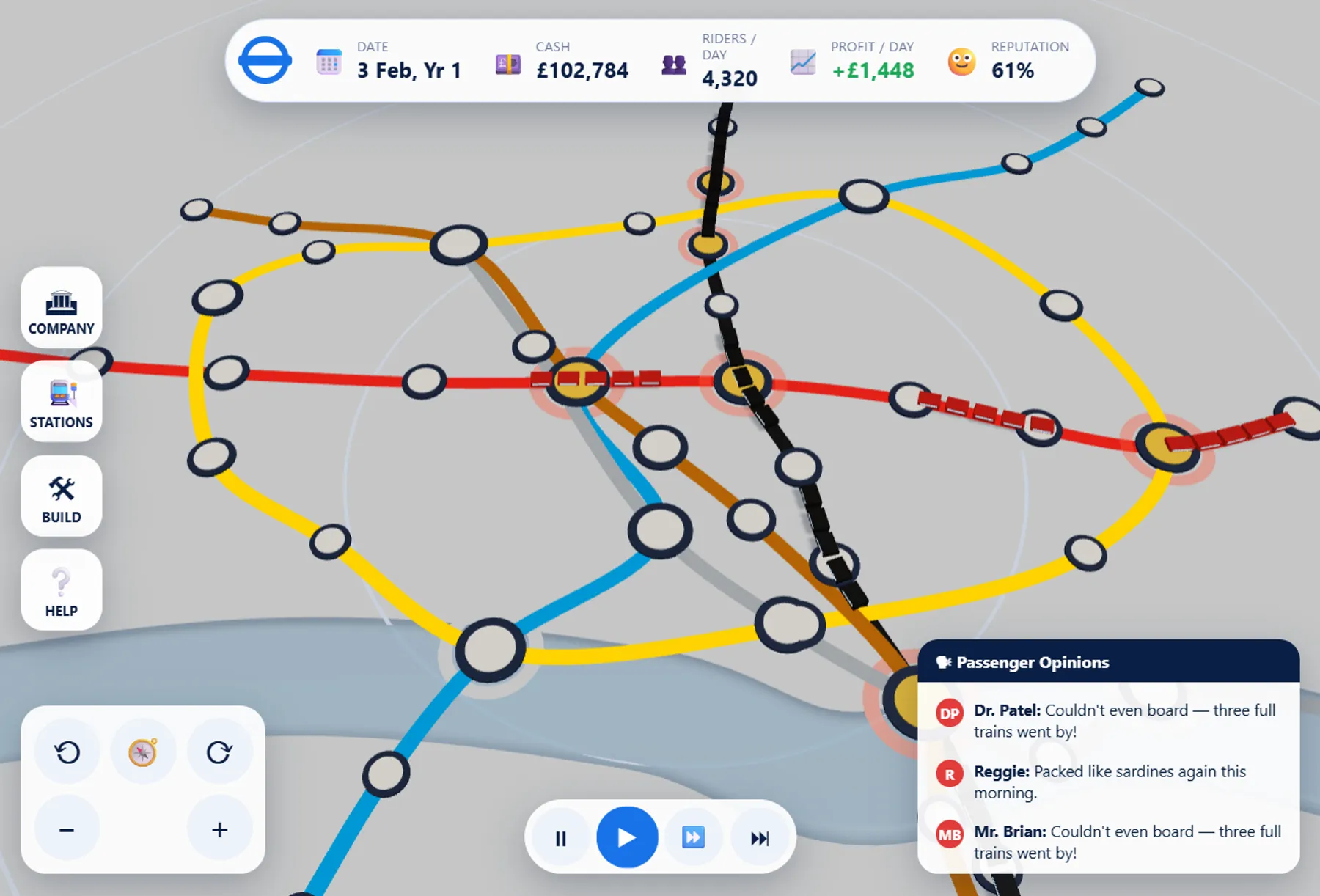
MetroTycoon project overview
A running metro network: trains move across colour-coded lines while finance, ridership and reputation update over time.

Overview

MetroTycoon turns a schematic underground map into a live business simulation. Players lay colour-coded lines, purchase stations and adjust fares, fleet size, staffing and advertising. Time controls expose the relationship between network design and the daily ledger, while passenger comments translate capacity problems into immediate human feedback.

Development areas

  • ▹Buildable metro lines and stations
  • ▹Live economy and ridership simulation
  • ▹Operations and marketing controls
  • ▹Passenger sentiment feedback

Simulation loop

Build, operate, read the city, then adjust

The 3D network is both the game board and a live explanation of the business underneath it.

  1. 01

    Build

    Buy stations and connect them with colour-coded lines

  2. 02

    Operate

    Set fares, fleet size, staffing and advertising

  3. 03

    Simulate

    Time advances and trains carry demand through the network

  4. 04

    Measure

    Cash, riders, daily profit and reputation update

  5. 05

    Listen

    Passenger opinions expose crowding and service failures

  6. 06

    Improve

    Change capacity, routes or policy and watch the response

Interface

A strategy game presented as an operating dashboard

The map stays central while compact controls expose the decisions that matter. The visual language borrows from real transit maps, so route colour, station size, moving trains and interchange geometry carry information before the player opens a management panel.

  • Pause and multiple simulation speeds
  • Rotate, reset and zoom controls for the WebGL scene
  • Persistent headline metrics across the top of the screen
  • Passenger comments that connect numbers to service quality

What I built

  • Built the interactive Three.js transit network and camera controls
  • Connected line and station building to the simulation economy
  • Designed management controls for fares, fleet, staffing and promotion
  • Created real-time feedback for cash, riders, profit, reputation and passenger sentiment
Key challenges

  • Keeping overlapping routes and interchange stations readable
  • Balancing operational detail with a fast browser-game loop
  • Explaining the reason behind changing financial and reputation metrics

Next steps

  • Expand scenarios and city constraints
  • Add clearer forecasting before large purchases
  • Continue mobile interaction and performance testing

Project gallery

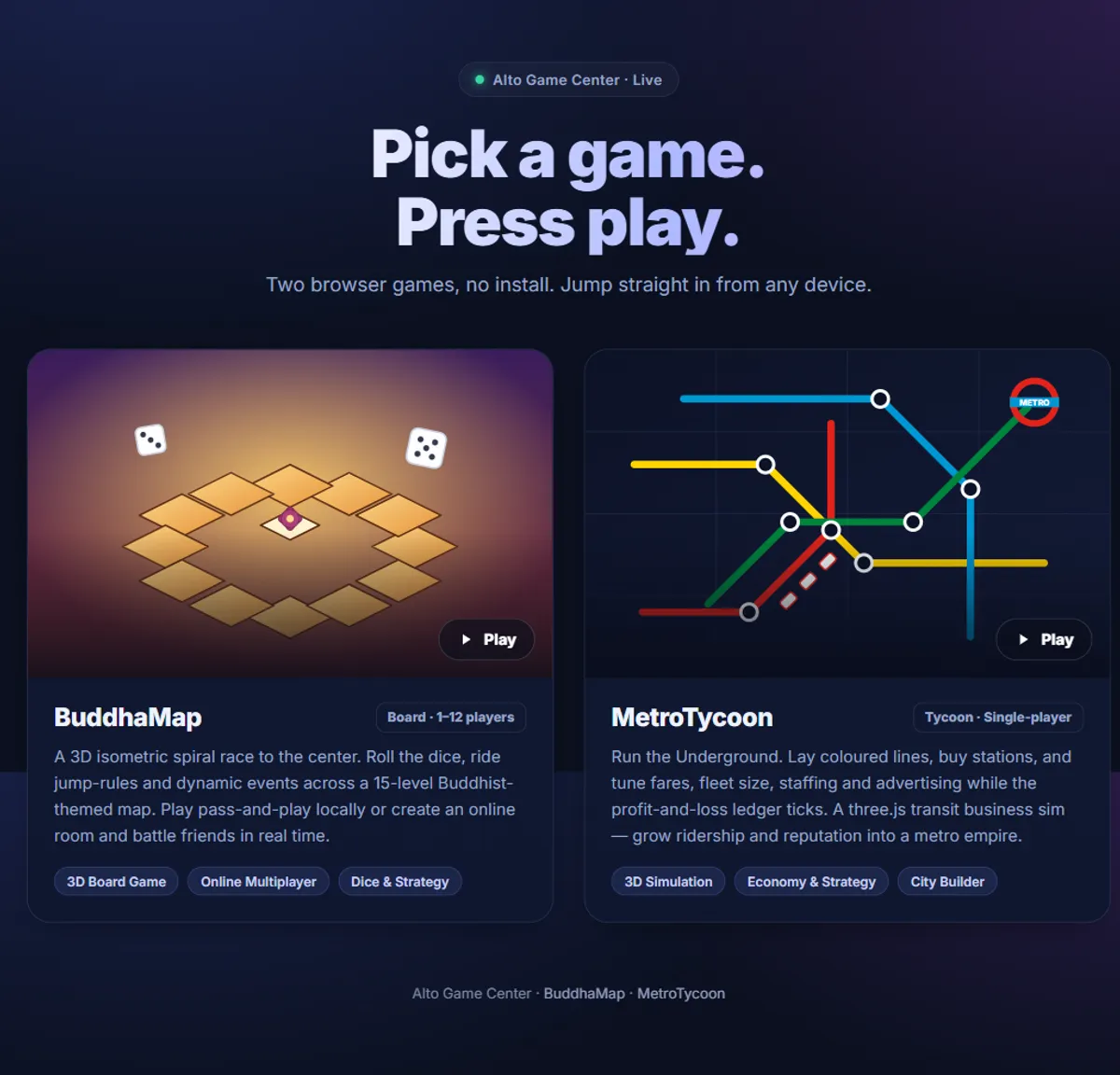
BuddhaMap and MetroTycoon in the Alto Game Center

Interested in games, interactive technology or indie development?

Get in touch